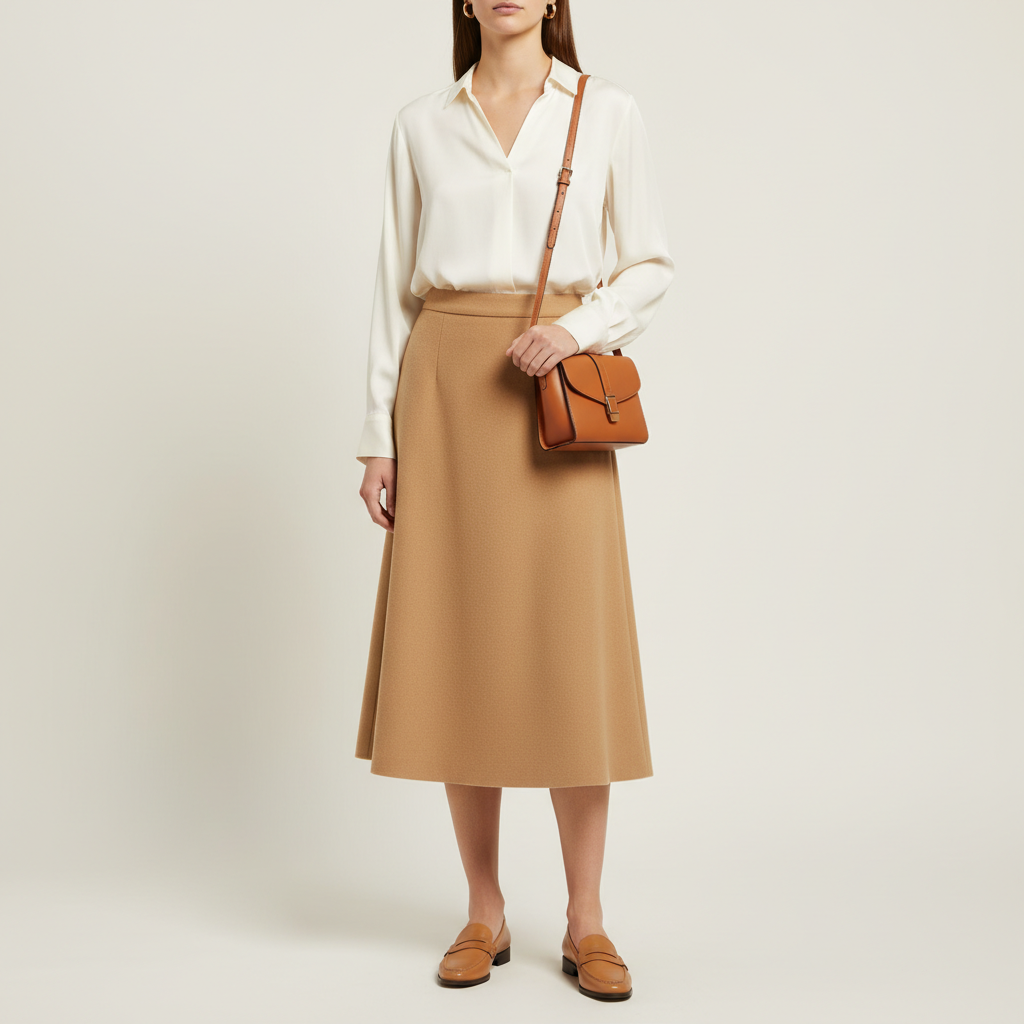
Brunch is the most forgiving dress code in existence — and also one of the most misread. The occasion spans an enormous range, from a neighbourhood café with paper napkins and a walk-up queue to a hotel dining room with a champagne tower and a dress code on the reservation confirmation. Getting the register right matters more than most weekend occasions because the wrong outfit reads as either underdressed at an elevated venue or try-hard at a casual one.
The brunch outfit has a specific visual grammar that distinguishes it from both a lunch outfit and a breakfast outfit. It's the meal where the French girl aesthetic lives most naturally: something that looks assembled without looking constructed, polished but not precious, stylish but legible as someone who has a life outside of what she's wearing. The looks that work best at brunch are the ones that read as slightly more considered than the occasion technically requires — not cocktail-formal, but clearly not pyjamas with a wallet attached.
The seasonal consideration is real. A summer brunch on a terrace calls for different fabric logic than a winter brunch in a heated room. But the underlying formula is consistent: one interesting piece that does the visual work (a printed midi skirt, a beautifully cut blazer, an elevated knit), one neutral that grounds it, and footwear that signals the right day-off-but-considered energy. The brunch outfit is not trying to be anything other than what it is: someone who got dressed with intention on a Saturday morning, without needing to prove it.
The Brunch Dress Code Spectrum: Casual Café to Hotel Champagne Brunch
Brunch spans more dress code territory than almost any other social occasion, and reading the venue correctly before getting dressed saves the experience of arriving overdressed in silk at a counter-service spot or underdressed in denim at a hotel dining room with tablecloths and a dress code. The casual café end of the spectrum (neighbourhood spots, outdoor tables, counter service): elevated casual — a quality tee or relaxed blouse, straight-leg jeans or a midi skirt in a relaxed fabric, clean trainers or loafers. Smart-casual brunch (sit-down restaurants, birthday celebrations, mid-range hotels): the core brunch formula applies — a silk or quality blouse, a midi skirt or tailored trousers, loafers or heeled mules, a small crossbody. Elevated brunch (five-star hotel dining room, formal event brunch, champagne celebration): the formula reads upward — a silk blouse becomes a silk dress or a formal blouse with tailored trousers, flat loafers become heeled mules or strappy sandals, and the accessories step up to match the tablecloth.
The Brunch Outfit by Season: How the Formula Adapts
The brunch formula is consistent across seasons but the specific pieces rotate with the temperature. Spring brunch: the formula's lightest expression — a floral midi dress with a white linen blazer and tan leather sandals, or a silk blouse with linen wide-leg trousers and loafers. The colour palette opens up: dusty rose, sage green, and lavender work alongside the perennial neutrals. Summer brunch: heat management becomes the priority — a cotton or linen midi dress in a light tone (cream, white, soft yellow), flat leather sandals, a straw or woven bag, and one simple gold chain. The fabric must breathe; the silhouette must flow. Autumn brunch: the earth-tone formula's natural moment — camel, rust, chocolate, and cream in wool, cashmere, and leather. A wool midi skirt with a silk blouse and ankle boots is the season's most reliable brunch look. Winter brunch: layering becomes the visual interest — a ribbed turtleneck under a slip dress, a long cardigan over a fitted knit, or a blazer over a silk blouse with tailored trousers and boots. The palette deepens: deep burgundy, forest green, and chocolate replace the warm earth tones of autumn.
The Half-Tuck: The Specific Styling Technique That Makes a Brunch Outfit Work
The half-tuck is the single most useful styling technique for brunch dressing — and it is specifically a brunch technique rather than a general one. The full tuck reads as too neat for a weekend occasion; the untucked shirt reads as unfinished. The half-tuck — one side of the blouse or tee tucked loosely into the waistband, the other side falling free — creates the visual effect of something assembled naturally rather than constructed deliberately. It implies a person who got dressed and then adjusted in front of the mirror until it looked right, rather than a person who followed a formula. The execution: tuck only the front section of the shirt, leaving the sides and back free. Tuck loosely — you're creating a small amount of volume at the waist, not pulling everything flat. The technique works best with relaxed-fit blouses and tees; fitted tops benefit less because the visual effect is subtler.
What to Wear to Brunch When You're Going Somewhere Afterwards
The most common brunch wardrobe problem is the outfit that works perfectly for the meal but doesn't extend to wherever the day goes next — a gallery opening, a shopping afternoon, a dinner reservation. The solution is the brunch outfit's transitional potential: the pieces that brunch naturally accommodates are also the pieces that extend to the widest range of subsequent activities. A silk blouse and midi skirt with loafers transitions to a gallery or afternoon shopping without any changes; a blazer added to the same outfit extends it to a smart-casual dinner. The specific additions to carry for transition: a small blazer or structured jacket folded into the tote (it stays pristine in a quality tote and transforms the outfit's register on addition), a pair of heeled mules in the bag if the evening destination is more formal (loafers out, mules in — the outfit becomes evening-appropriate in ninety seconds), and a small silk scarf that can be worn at the neck, on the bag handle, or in the hair — the kind of lightweight, zero-volume accessory that changes the look's energy without changing a single garment.
What is the best outfit for brunch?
The best brunch outfit for most occasions: a silk or quality blouse (or a relaxed-fit quality tee for more casual venues), a midi skirt in a flattering fabric (wool, cotton-blend, or satin depending on the season), flat loafers or heeled mules depending on formality, and a small crossbody bag. The styling note that makes it: a half-tuck on the blouse, which reads as deliberate without being formal. The colour formula: two tones from the warm neutral range (cream + camel, ivory + rust, white + chocolate) with a cognac or tan accessory to anchor. This combination works at 90% of brunch occasions across all seasons.
What should I wear to a fancy brunch or hotel brunch?
For an elevated brunch venue (hotel dining room, five-star restaurant, formal birthday celebration brunch): the formula reads upward from the standard. A silk midi dress or a silk blouse with tailored wide-leg trousers replaces the casual blouse-and-skirt combination. Heeled mules or strappy flats replace loafers. A small structured bag or clutch replaces a crossbody. Fine jewellery rather than casual hoops. The colour palette can include jewel tones — deep dusty rose, forest green, champagne — that signal evening-adjacent dressing. The test: would this outfit work at a smart-casual lunch? If yes, it works at an elevated brunch.
Can I wear jeans to brunch?
Yes — jeans at brunch are appropriate at casual venues and at smart-casual ones with the right styling. The key is the quality and fit of the jeans and what they're paired with. Dark, clean, straight-leg or wide-leg jeans in good condition with a silk or quality blouse, loafers, and a small structured bag read as intentional weekend dressing. Light-wash or distressed jeans with a casual tee and trainers read as dressed-down — appropriate for a counter-service café, less appropriate for a sit-down restaurant. The jeans that don't work at any brunch: visibly worn jeans with holes (unless you're at a very casual spot), heavily embellished jeans, and jeans worn with athletic footwear and an athletic top simultaneously.
What shoes should I wear to brunch?
The brunch shoe hierarchy: leather loafers (the most universally appropriate brunch shoe — they read as considered, they're comfortable for the walk to the venue, and they work from casual café to smart-casual dining room), heeled mules in a neutral tone (the elevation option — adds formality for a more dressed-up venue), white leather trainers (appropriate at casual or fashion-forward venues with the right outfit pairing — a quality blouse and straight-leg jeans with white leather trainers reads as considered weekend dressing), ballet flats in a neutral tone (the comfort-first option for warm days), and strappy flat sandals in leather (the summer brunch shoe — comfortable, polished, appropriate everywhere except the most formal venues).
What should I wear to a birthday brunch?
A birthday brunch sits at the elevated end of the brunch spectrum because it's a celebration context — the person being celebrated will notice if the group hasn't made an effort. The formula: one piece above your usual brunch register (a silk blouse where you'd normally wear a quality tee, a midi dress where you'd normally wear trousers and a top, a printed skirt where you'd normally wear a plain one), with accessories that signal the same upgrade. For summer: a floral or printed midi dress with heeled sandals. For autumn and winter: a silk blouse with a velvet or wool midi skirt and heeled loafers. The colour consideration: if you know the birthday person has a strong colour preference or the event has a colour theme, factor that into the palette — but a warm neutral anchor (cream, camel, ivory) always reads as appropriately celebratory.
How do I look put-together at brunch without looking overdressed?
The balance is achieved through the concept of intentional ease — looking polished but also like you wore this because you wanted to, not because the occasion demanded it. The specific techniques: choose one interesting piece and keep everything else simple (a printed skirt with a plain white tee; an interesting blouse with simple straight-leg trousers); use the half-tuck to signal relaxed intentionality; choose flat or low-heeled footwear over stilettos (stilettos at a casual brunch read as overdressed regardless of what's above them); and keep jewellery to one or two quality pieces rather than layering aggressively. The litmus test: would this outfit read as you being yourself at a weekend meal, or would it read as you trying? If the former, it's calibrated correctly.