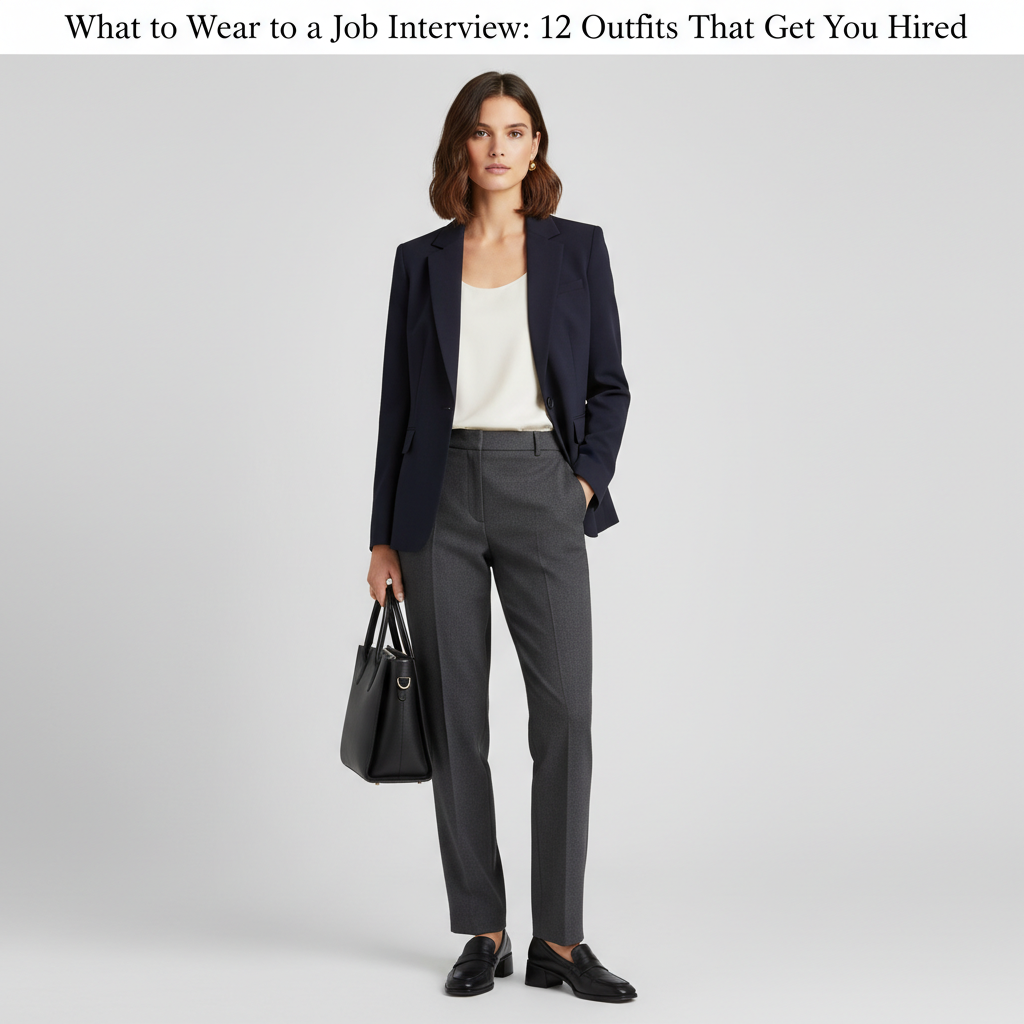
A 2024 CareerBuilder survey found that 65% of hiring managers say clothing can be a deciding factor between two equally qualified candidates. That number should both alarm you and empower you — because unlike your resume, your outfit is entirely within your control in the 24 hours before an interview.
The problem? "Professional dress" now means something radically different at a seed-stage startup in San Francisco than it does at a Goldman Sachs trading floor or a Condé Nast editorial desk. Getting it wrong in either direction — too formal at a hoodie-culture company, too casual at a law firm — signals a culture misread before you've said a word.
This guide cuts through the ambiguity. Below are 12 real-world interview looks organized by industry, each built around brands you can actually shop, with prices that won't send you into debt before your first paycheck. The single most important rule: your outfit should never be what the interviewer is thinking about. It should disappear into a clean, credible first impression — and let your answers do the actual work.
How to Research the Dress Code Before You Arrive
The most reliable signal is the company's LinkedIn page. Filter employees by department — not just the marketing team they curate for brand purposes, but the actual people in your target function. If the engineering lead is in a quarter-zip and the CFO is in a blazer, your answer depends on which one you're meeting with. When in doubt, dress one level above what you observe: business casual when you see casual, business professional when you see business casual. It is far easier to remove a blazer between the lobby and the interview room than to conjure professionalism you didn't bring.
The Industry Breakdown: What 'Professional' Actually Means
Finance, law, and consulting still operate by the old rules: tailored trousers or a sheath dress, closed-toe shoes, conservative colour palette. Tech and startups have moved to smart casual — dark jeans are acceptable, trainers are not, a blazer remains a safe signal of seriousness. Creative industries (advertising, publishing, design) penalise you for looking too corporate: a structured outfit in an unexpected colour or with an interesting textile reads better than a standard navy suit. Healthcare and education sit closer to the conservative end — clean, unobtrusive, and clearly considered.
What Not to Wear (The Honest List)
Anything that requires you to adjust it during the interview: a too-short skirt, a slipping strap, a waistband that digs. Strong fragrance — you don't know the interviewer's sensitivities and you won't get credit for smelling good. Novelty prints or graphics of any kind. Open-toed shoes in a conservative industry. Clothing that's visibly wrinkled, pilled, or has a hem that's coming loose — quality signals extend to maintenance. And the most overlooked: anything brand-new and untested. Wear the outfit around your home the evening before. Sit down. Stand up. Check for gaps, pulls, and anything that makes you self-conscious.
Video Interview Dressing: What Actually Works on Camera
Your interviewer will see you from the shoulders up, which means your blazer, blouse, and earrings are doing all the work. Avoid pure white — it can blow out against most backgrounds and introduce unflattering contrast. Medium tones (navy, slate, camel, dusty rose) photograph cleanly. Small patterns and fine stripes create a visual buzzing effect called moiré on video — stick to solids. Your background matters almost as much as your outfit: a plain wall or a styled bookshelf signals the same kind of organisational thoughtfulness as a clean tote. Position your camera at eye level, not below your chin.
Is it okay to wear all black to a job interview?
Yes, with intention. An all-black outfit reads as sophisticated and authoritative in most industries, particularly creative fields and urban professional environments. The risk is looking funereal in a conservative industry (banking, law) or severe in a people-focused role (HR, education). The fix: add a single warm element — a camel bag, a gold necklace, a blush blouse under a black blazer — to break the uniformity without undermining the polish.
Can I wear jeans to a startup interview?
Dark, unripped jeans in a slim or straight cut can work at startups and creative companies, particularly if paired with a structured blazer and clean shoes. The key word is 'structured': the more relaxed your lower half, the more intentional your upper half needs to be. If you're uncertain, opt for tailored trousers — they read as dressed-down when worn with a casual top, and dressed-up when paired with a blazer. You're not giving anything up by being slightly more formal.
What shoes work for every type of interview?
The block-heel loafer is the most universally appropriate interview shoe: it has the polish of a heel without the formality of a stiletto, and works in every industry from law to tech. A clean white leather trainers can work in creative or startup environments but requires the rest of the outfit to be clearly elevated. Ballet flats work in smart-casual environments. Whatever you choose: clean, unscuffed, and comfortable enough that your posture doesn't suffer after an hour of walking through an office.
How formal should my bag be?
Your bag should be one of three things: a structured tote that holds a laptop and portfolio, a sleek leather shoulder bag, or a minimal crossbody in a quality material. Avoid backpacks in conservative industries (they signal student, not professional), canvas totes (they read as errand-running, not career-focused), and anything with visible logos in ironic or street-cultural positioning. Black is the safest colour. Tan or camel is equally professional and slightly more memorable. The bag should close properly — an open-topped bag that shows its contents signals disorganisation.
Should I dress to match the company culture or one level above it?
One level above, always — but not dramatically so. The logic is asymmetric: arriving slightly overdressed communicates respect and seriousness, and can always be softened by removing a blazer or rolling your sleeves. Arriving underdressed is harder to recover from in the room. The exception is if you're interviewing at a company where the culture is explicitly anti-formal (certain tech companies, creative studios) — in those cases, matching the culture exactly reads as better cultural fit than showing up in a suit.
What colours should I avoid for an interview?
Avoid anything too saturated or bright as your primary piece — neon, bright orange, bold red — unless you're in a creative field where standing out is part of the brief. Patterns that are too complex (large florals, bold graphics) compete with your face on video and in person. The safest palette: navy, charcoal, camel, ivory, blush, forest green, and burgundy. These read as intentional without demanding attention. Pops of colour in accessories (a cobalt bag, a printed scarf) work well because they're memorable without being overwhelming.