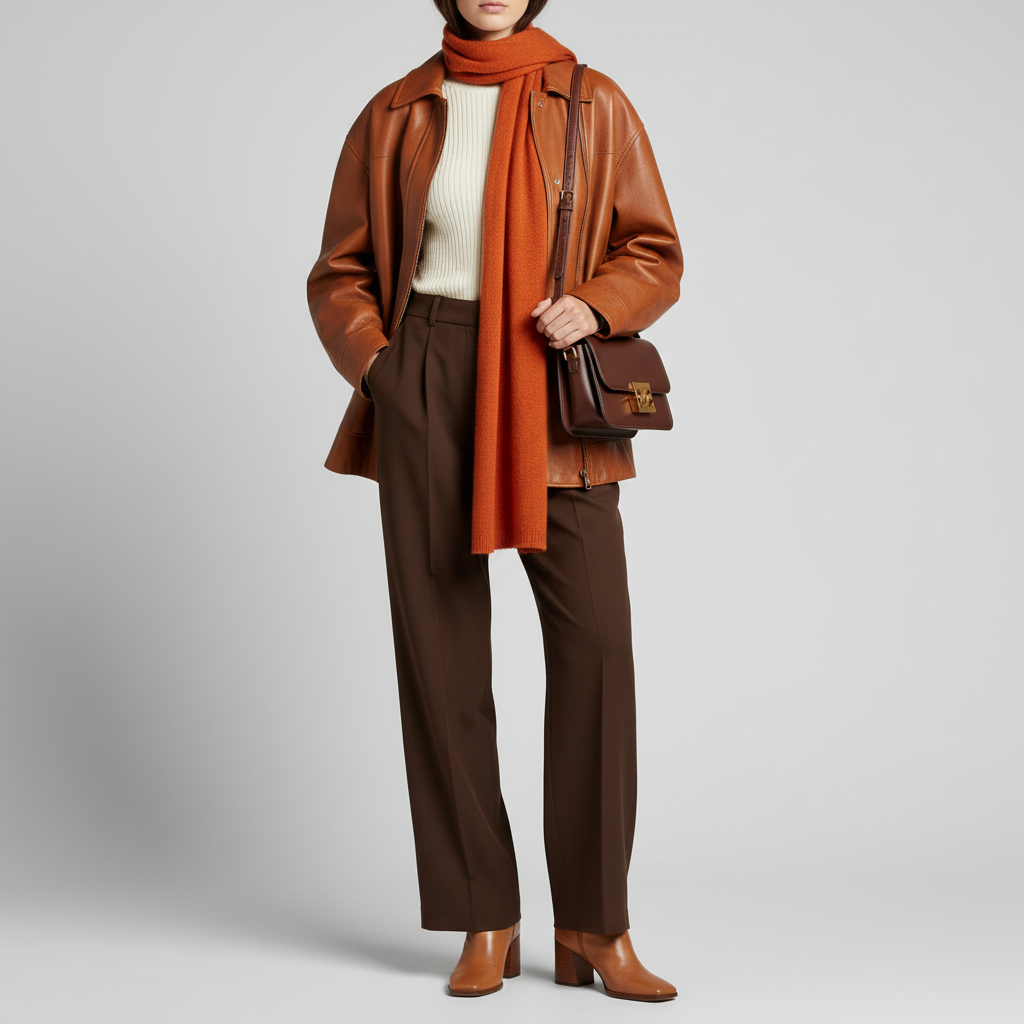
There is a specific kind of dressing that only autumn makes possible. The air has dropped just enough to justify a jacket but not enough to require a coat. The light turns golden and flattens every colour into something more considered. And suddenly the single-layer problem of summer gives way to the three-piece puzzle that is the real pleasure of getting dressed — a foundation, a middle layer, and something that ties it together.
Fall 2026 has a clear aesthetic direction: rich earth tones in natural materials, oversized silhouettes grounded by one fitted piece, and a return to leather — not the aggressive kind, but the soft, worn-in, lived-with kind that looks better the second year than the first. The key palette this season runs from warm chocolate and rust to deep forest green, with cream and ivory as the neutrals that make all of it work together.
The mistake most people make with fall dressing is reaching for dark colours too early and too completely. An all-black outfit in September is a missed opportunity — the season's richest looks come from layering the warm end of the spectrum: rust over cream, camel over chocolate, olive over rust. These combinations have the same logic as a well-composed room: each element is distinct, but the whole reads as unified.
This guide gives you the 2026 fall formula — the pieces, the proportions, and the specific brands that execute them at every price point — then breaks it down by occasion so you can apply it to Monday morning and Saturday afternoon without rebuilding from scratch.
The 2026 Fall Colour Palette: Why These Shades and No Others
Fall 2026 has moved away from the stark black-and-white minimalism that dominated the previous two years and toward a warm, saturated earth palette: cognac, chocolate, rust, forest green, camel, and deep burgundy, with cream and ivory as the neutrals that allow all of them to coexist. The logic of this palette is that each colour naturally complements the others — you can combine any three of them and arrive at a coherent outfit without additional planning. The colours to treat with care this season: bright orange (too Halloween, too far from the season's considered tone), grey (too cold for the warm direction — charcoal works, mid-grey doesn't), and navy (it reads as autumn's less sophisticated cousin when placed next to brown and rust). The single most useful addition to any fall wardrobe: one piece in forest green. It bridges brown and black, elevates cream, and reads as intentionally seasonal without being costumey.
The Fall Layering Formula: How to Build an Outfit That Works Across 15°C
The practical challenge of fall dressing is thermal range: a single outfit needs to function from a cold morning commute through a warm afternoon meeting and back out into a cool evening. The solution is a three-layer system with a clear logic to each piece. Layer one (foundation): a fitted knit or quality tee in a neutral — cream, white, or camel. This is the piece that touches your skin and does the work of warmth at the base. Layer two (mid-layer): a blazer, cardigan, or light jacket that adds structure and can be removed independently of the outer layer. Layer three (outer): the piece that defines the silhouette — a leather jacket, oversized coat, or wool-blend overshirt. The key principle is that each layer should be visible when worn together — you're not hiding anything under anything else. The foundation peeks above the mid-layer neckline; the mid-layer's sleeves extend slightly beyond the jacket's. This intentional layering is what distinguishes fall dressing from simply wearing several things at once.
Fall Fabrics Worth Investing In (and the Ones to Avoid)
Fall is the season that justifies proper fabric investment because the pieces are worn daily and the difference between a good fabric and a poor one is visible within the first three weeks of regular use. The fabrics worth spending on: merino wool for knits (it regulates temperature, resists odour, and maintains its shape through repeated wear — a quality merino knit in cream or camel will outlast ten acrylic alternatives), real leather for jackets and bags (it develops character rather than deteriorating — a $250 leather jacket at year five looks better than it did at year one, while a $70 faux-leather version looks worse), and wool-blend for coats and blazers (a 30% or higher wool content is the threshold between a garment that holds its shape and one that sacks out by November). The fabrics to approach cautiously: polyester blends in dark colours (they pill quickly and reflect light in an unpleasant way), faux suede (the quality spread is enormous — it either reads as convincing or as definitively synthetic, with little middle ground), and 100% cotton in thinner weights (it doesn't layer warmly enough to justify its place in a fall wardrobe unless it's a heavyweight flannel).
Transitioning Your Summer Wardrobe Into Autumn Without Buying Everything New
The most financially rational approach to fall dressing is transitional layering — using summer pieces as the foundation layer beneath new autumn additions. A summer linen midi dress worn under an oversized camel cardigan and over ankle boots becomes an autumn outfit with a combined cost of one cardigan and one pair of boots. Your summer white tee becomes the underpinning of a fall blazer look. Your linen wide-leg trousers work through September and into October with the addition of a fitted merino knit on top. The three additions that create the most new combinations from an existing summer wardrobe: one quality knit in cream or camel (it layers over everything), one ankle boot in tan or brown (it grounds summer's lighter colour palette into autumn), and one leather or leather-look jacket (it immediately shifts the register of any combination beneath it). These three pieces create approximately fifteen new outfit combinations from a ten-piece summer wardrobe before you've bought anything else.
What are the key fall fashion trends for women in 2026?
The defining directions for fall 2026: a rich earth-tone palette centred on cognac, chocolate, rust, and forest green; oversized leather jackets in warm browns worn over fitted knits; wide-leg and barrel-leg trouser silhouettes that balance the volume of outerwear; soft suede and brushed wool textures across every category; and a return to proper ankle boots over flat Chelsea boots. The anti-trends this season: stark black-and-white minimalism (it peaked and is now stepping back in favour of warmth), extremely oversized everything at once (the proportion game has tightened — one oversized piece per outfit, balanced by something fitted), and visible logos on primary pieces. The accessories direction: understated gold jewellery, leather bags in warm neutrals, and scarves worn loosely rather than knotted.
What are the must-have fall wardrobe essentials for 2026?
The five pieces that create the most outfit combinations for fall 2026: a cream or ivory ribbed merino knit (layers under everything, reads as both casual and smart-casual depending on what's over it), a cognac or tan leather jacket (the season's defining outerwear, improves with wear), wide-leg trousers in chocolate or camel (replaces last season's straight-leg as the primary trouser silhouette), tan or cognac ankle boots (the universal fall shoe that works with every silhouette from midi skirts to wide-leg trousers to straight-leg jeans), and a structured tote or shoulder bag in a warm brown or forest green (the accessory that ties an earth-tone palette together). These five pieces create approximately twenty-five distinct outfit combinations before any other wardrobe items are introduced.
How do I wear fall colours without looking too dark?
The solution to the all-dark fall problem is the intentional neutral — one light piece in every outfit that gives the eye somewhere to rest. A cream knit under a chocolate coat. An ivory blouse beneath a forest green blazer. A camel trench over a burgundy sweater. The neutral creates visual contrast and prevents the look from reading as heavy or funereal. The second strategy: vary the tone within your earth palette. Mixing chocolate, cognac, and rust — three distinct shades within the same warm family — reads as rich and layered rather than dark. The failure mode is wearing the same depth of tone head to toe: charcoal grey shirt, dark grey trousers, and black shoes is monochromatic in a way that flattens rather than elevates.
What should I wear on a cool fall day when I don't want a heavy coat?
The transitional fall formula for cool-but-not-cold days (8–16°C): a fitted merino or cotton-cashmere knit as your base, a leather or denim jacket as your mid-layer, and a lightweight wool or canvas overshirt as the third layer if needed. This three-piece combination adds and removes warmth incrementally — the jacket handles the morning chill, the overshirt adds a buffer on windier days, and the knit alone is sufficient for heated indoor spaces. The key is that every layer should be intentionally styled, not just functional: an overshirt in a complementary colour to your jacket reads as considered, while a thrown-on hoodie as a third layer undermines the outfit regardless of what's under it.
Can I still wear summer pieces in fall?
Yes — transitional dressing is one of the pleasures of September and early October. Linen midi dresses work under oversized knit cardigans and over ankle boots until temperatures drop below 10°C. Linen wide-leg trousers pair naturally with merino knits and leather jackets. Lightweight cotton blouses layer under blazers and beneath heavier knits. The summer pieces that don't transition well: anything in a bright, saturated summer colour (neon, bright coral, tropical prints) — these read as seasonally misaligned against the autumn palette; and anything too sheer to be layered, since they provide no thermal value as a base layer. The rule of thumb: if a summer piece works under or over an autumn piece without looking incongruous, it's a valid transitional choice.
What shoes work best for fall outfits?
The fall shoe hierarchy by versatility: ankle boots in tan, cognac, or chocolate (the most universally applicable fall shoe — they work with everything from midi skirts to wide-leg trousers to straight-leg jeans, and in the warm tones of the season's palette), loafers in black or brown leather (the smart-casual option that transitions from office to weekend without effort), white leather trainers (still viable through October when the colour palette isn't entirely dark), Chelsea boots in black (the utilitarian option for wetter autumn days — less visually interesting than ankle boots but more weather-resistant), and heeled mules in suede for evenings (the elevation piece that takes a daytime outfit into dinner territory). What to avoid: sandals past the first week of September in most climates (the seasonal cognitive dissonance is too pronounced), and rubber-soled boots in a business casual context (they read as practical rather than considered).