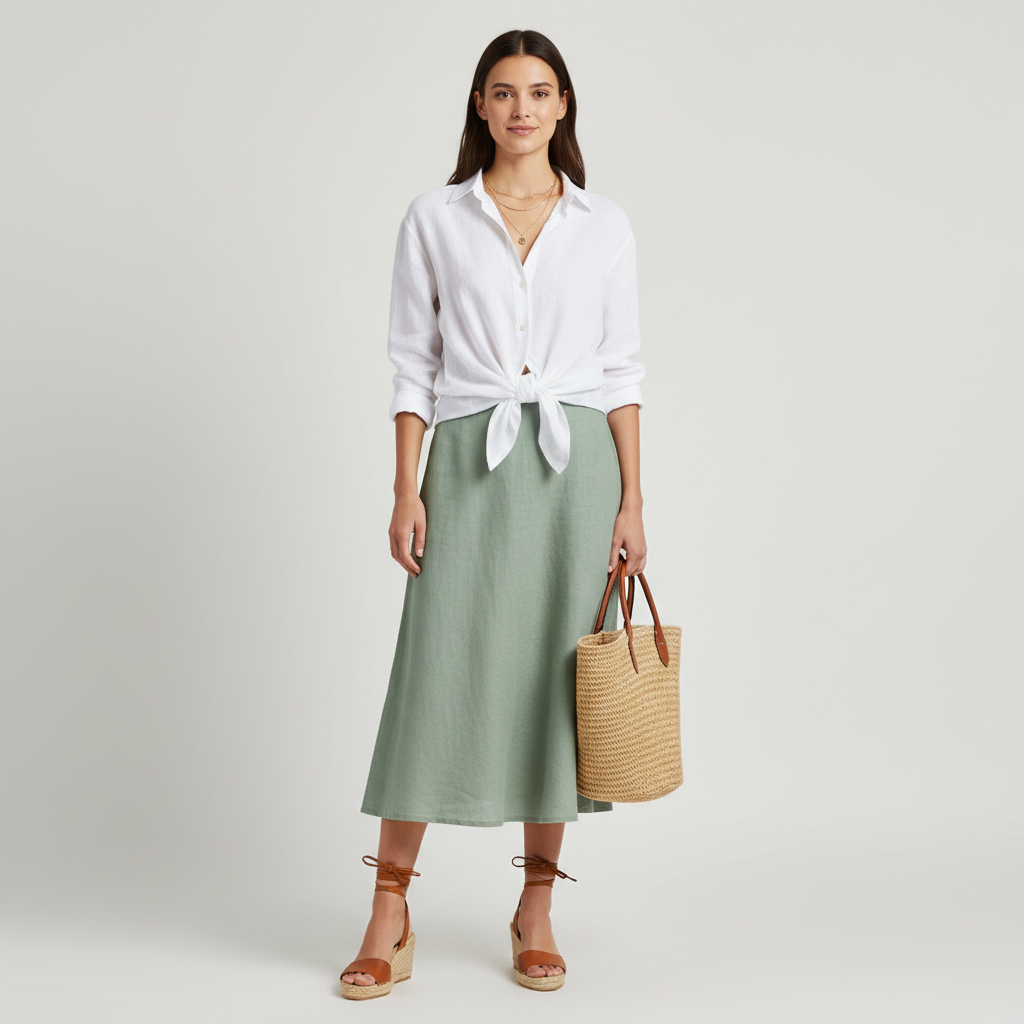
Summer 2026 has a clear aesthetic direction, and for once it's a genuinely useful one: linen is everywhere, the silhouettes are relaxed and Mediterranean, the palette has warmed up from last year's clean whites into terracotta, warm sage, and the specific shade of butter yellow that photographs gold under afternoon light.
The bigger shift is in how summer dressing is being structured. The rigid categories — resort wear, city casual, beach — are blurring. The linen midi skirt that works at a Santorini restaurant works equally well at a rooftop bar in London or a Saturday farmers' market in Austin. The oversized linen shirt functions as a beach cover-up, a city layer over a slip dress, and a standalone piece with white straight-leg jeans. The versatility isn't accidental: when fabrics are right (natural, breathable, with appropriate drape), the outfit goes everywhere the summer does.
What follows is a breakdown by occasion — beach, city, vacation resort, and outdoor events — with specific formulas, the exact pieces that are doing the most work this summer, and the brands that are executing the 2026 direction best. The criteria for every piece: it has to breathe, it has to travel without becoming a wrinkled disaster, and it has to look like you thought about it for thirty seconds rather than thirty minutes.
The Beach-to-Bar Formula: How to Dress for Summer's Main Event
The beach-to-bar transition is summer's central style challenge: you need something that works in direct sun by the water and then reads as appropriate at a restaurant or bar three hours later without going back to change. The formula that solves it: a linen midi dress or a linen skirt with the linen shirt as the layer. The linen dress works as a cover-up over a swimsuit on the beach; worn belted with wedge sandals and gold jewellery at dinner, it becomes an evening outfit. The skirt and shirt combination layers in reverse: worn open on the beach, then styled and half-tucked for the evening transition. The accessories do the heavy lifting for the context shift — exchanging flat slides for wedge sandals and adding jewellery communicates 'evening' more efficiently than any clothing change.
City Summer Dressing: How to Look Considered in 35°C Heat
Urban summer dressing has a specific challenge that resort and beach dressing doesn't: you need to look intentional while dealing with air conditioning (which punishes bare arms), public transport (which punishes white linen immediately), and professional contexts that don't fully relax even in July. The city summer formula: linen wide-leg trousers in a neutral colour (they hide city wear better than a skirt) with a silk-touch sleeveless top or a fitted linen shirt. A structured tote bag rather than the raffia (it's practical for a day with varied stops). Low heeled mules or loafers over sandals (they work better on city pavements). A lightweight blazer or oversized linen shirt in your bag for air-conditioned spaces. The goal is a summer outfit that reads as deliberate from a distance and performs across every temperature zone you encounter.
Vacation Resort Dressing: The Look for Everywhere That Isn't Home
Resort dressing in 2026 has moved away from the 'resort collection' aesthetic (heavily embellished, explicitly holiday-coded) toward a more considered version of everyday summer dressing elevated by setting. The pieces that are working: a column or A-line linen dress in a rich colour (terracotta, cobalt, deep saffron) for dinner; wide-leg linen or cotton trousers for daytime exploring; a straw hat that works as a beach item and a town item without reading as costume; and leather sandals rather than flip-flops even at the most casual venues. The investment: a single dress in a colour that photographs beautifully against the specific background of your destination. Terracotta works everywhere but particularly against white-wall Mediterranean architecture. Cobalt photographs against sea and sky. Deep saffron photographs against sand and stone.
The 2026 Colour Palette: Why These Shades Are Dominating Summer
The 2026 summer palette has made a decisive move away from the clean white and beige minimalism of 2023–2024 toward warmer, earthier tones. Terracotta has become the defining colour of the season — visible in every major retailer's summer campaign and performing consistently well in online search. Sage green is the cooler complement: it reads as modern rather than dated in the same way that mint or lime don't, and it coordinates with natural materials (raffia, jute, light wood) better than most other greens. Butter yellow — a warm, slightly muted shade closer to golden wheat than to primary yellow — is the pop colour of the season, appearing as a skirt, a dress, or an accessory. Warm white (off-white, ecru) rather than clean white is the base tone across all of these: it photographs with more warmth and reads as more intentional.
What are the key summer fashion trends for 2026?
The defining directions for summer 2026: linen in every form (shirts, skirts, dresses, trousers), relaxed Mediterranean silhouettes with generous cuts that prioritise ease of movement, a warm earthy palette centred on terracotta, sage green, and butter yellow, and natural materials throughout (raffia, jute, woven textures for bags and shoes). The specific pieces that are dominating: oversized linen shirts worn half-tucked or open over swimwear, linen midi skirts in warm earthy tones, espadrille wedges and leather flat sandals over heeled shoes, and layered fine gold chain jewellery. The anti-trends: bodycon silhouettes (still present but declining), highly branded pieces, and the clean white minimalism that peaked in 2023.
What fabrics are best for summer clothing?
Natural fabrics perform significantly better than synthetics in summer heat for both comfort and aesthetic reasons. Linen is the most heat-appropriate fabric available: it wicks moisture efficiently, it allows air circulation, and it improves in appearance with wear (the slight wrinkling that linen develops through the day is now a considered aesthetic choice rather than a flaw). Cotton is the most versatile: a cotton poplin shirt is as appropriate for a city day as for a beach afternoon. Silk and silk-touch (quality polyester with silk drape) are the best evening fabrics — they feel cool against skin and photograph with a quality that other fabrics can't match. The fabrics to avoid: polyester and viscose blends without natural content (they retain heat and develop an unpleasant quality against skin in temperatures above 25°C), and heavy denim (fine in evening when temperatures drop, but impractical for full summer days).
What's the best summer outfit for a beach vacation?
The most efficient beach vacation formula: a white linen oversized shirt that doubles as cover-up and standalone piece, a linen midi skirt in a warm colour, leather flat sandals (not flip-flops — they read as more intentional and last longer), a raffia or woven tote large enough for beach essentials, and a simple one-piece swimsuit in a solid colour that works under the skirt at the beach and with the whole outfit at a beachside restaurant. This five-piece combination creates approximately eight distinct looks and travels in a carry-on. The additions worth considering: a wide-brim straw hat, a lightweight midi dress for evenings, and a second skirt in a complementary colour.
How do I dress for summer when it's extremely hot?
The hierarchy for extreme heat dressing: fabric first (linen and cotton only — nothing synthetic), then silhouette (loose and away from the body — wide leg, A-line, oversized), then colour (light and muted — dark colours absorb heat significantly faster than light ones), then length (counterintuitively, longer lengths in the right fabric are often cooler than short — midi linen skirts shade the legs and reduce direct sun exposure). The accessories consideration: a wide-brim hat reduces direct sun on the face and neck more effectively than sunscreen alone. Leather sandals over rubber-soled shoes — rubber retains heat, leather breathes. A lightweight scarf in white or cream can function as a sun shawl for shoulders without adding weight.
Can I wear summer outfits to the office?
Yes — with deliberate styling choices that bridge summer casual and office-appropriate. The summer office formula: linen or cotton wide-leg trousers (not linen shorts or mini skirts) with a structured silk or silk-touch blouse; a linen midi dress in a solid colour with a lightweight blazer for air-conditioned spaces; or a fitted linen shirt with tailored trousers and leather loafers. The key difference between summer casual and summer professional is typically structure: a blazer over a linen dress, a structured tote over a raffia beach bag, leather shoes over sandals. The fabric rules for office summer dressing are more forgiving than winter — linen and cotton are entirely appropriate in professional contexts as long as the silhouette and accessories signal deliberate dressing.
What shoes work best for summer outfits?
The summer shoe hierarchy by versatility: espadrille wedges (the most occasion-flexible summer shoe — they work from beach lunch to dinner without reading as either too casual or too formal), leather flat sandals in tan or cognac (the everyday summer shoe — comfortable enough for full-day city walking, refined enough for a restaurant), white leather trainers (the practical urban summer choice — they work with everything from linen trousers to midi dresses), raffia or leather mules (the home-to-café-to-lunch shoe — low effort, high visual result), and block-heeled sandals in a neutral tone (the evening elevation — takes any summer dress from casual to considered). What to avoid: flip-flops outside of immediate beach or pool contexts, heavily embellished sandals that compete with the outfit, and closed-toe shoes in synthetic materials that don't breathe.